
Beyond the Headlines: How COP30 was experienced in Brazil
COP30 took place in Belém, at the heart of the Amazon — a symbolic and politically charged location. While international media focused on negotiations and global outcomes, the public debate within Brazil unfolded quite differently.
This short reflection by IFAI collaborator Flavia Krenkel, written from within Brazil, captures how the event was perceived locally — what sparked discussion, what caused frustration, and which voices were heard or overlooked.
“Our land is not for sale!”
This powerful message was shouted during an Indigenous protest at COP30. It echoes far beyond the event itself — signaling the depth of tensions, expectations, and unresolved questions that marked Brazil’s role as host.
So, what actually resonated inside Brazil? Was the country satisfied with how the world saw it? Did the experience match the hopes of its citizens?
While COP30 marked the 30th edition of the United Nations Climate Change Conference, hosted this time in the Amazonian city of Belém, this piece does not focus on formal outcomes. Instead, it explores how Brazilians — across media, protests, and public commentary — experienced the event on the ground.
1. Overpriced places
This discussion started some weeks before the event itself. Unfortunately, many hotels and private rents dramatically increased their prices, in some cases by up to 1900%. Many delegations, from the climate change most affected countries, said they would not be able to be at the event because they could not find an affordable place to stay. This was a big discussion and the Brazilian government tried to negotiate with hotels and short-term rental platforms. Unfortunately, there was no agreement on that, which brought a lot of criticism to the event.
2. Overpriced food
A video from a journalist went viral after he complained that one soda and two snacks cost around 95 reais (15 EUR), while outside the same order would cost around 30 reais (4,78 EUR). Another reporter showed that the rent price for the stands were also high, so of course it was reflected in the food price, and also showed other cheaper places to eat inside the COP space, you just needed to look around.
3. German Chancellor statement
“Ladies and gentlemen, we live in one of the most beautiful countries in the world. Last week, I asked some journalists who were with me in Brazil: ‘Who among you would like to stay here?’ No one raised their hand. Everyone was delighted to be back in Germany and to have left that place,”. This statement made by Merz provoked the anger of Brazilians. A lot of Brazilians were also criticizing some issues, things that should be improved as a good host. But, this speech was seen as a lot of prejudice and many Brazilians reacted “We also don’t want you here, never come back!”. Also, the government opponents agreed with him, saying Belem is too dangerous, with no infrastructure for an event like this. Although Belem is, in fact, the most structured city in Brazil for a big event like that, it was chosen because the area is one of the most affected by climate change.
4. Indigenous protest
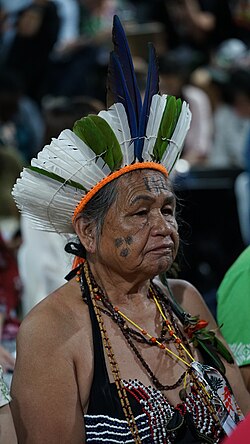
There were two protests that brought attention from everyone. “Our land is not for sale”, “We want our lands free from agribusiness, oil exploration, illegal miners and illegal loggers.
The indigenous groups, the most affected by Amazon exploration and devastation, were not feeling included in the discussion, they wanted to be heard by the UN and Lula, Brazilian president. This made the government very uncomfortable, worried how this would reflect in the international press. However, in Brazil, this was more explored about the president’s non supporters.
What was the result of COP30 in Brazilian media?
Many journalists argued that, although the final text was celebrated and some important decisions were, in fact, made, no new compromises about the use of fossil fuel were made. In the community, some Brazilians were proud to show northern culture and forests to the rest of the world. Brazil is not only Sao Paulo or Rio de Janeiro. For many, especially non government supporters, the event was a lot of money spent with few results.
The reactions to COP30 in Brazil show once again that climate conferences are not only political events, but deeply social and cultural moments. Listening to local voices, indigenous perspectives, and public debates is essential if climate action is to be inclusive and credible. These reflections remind us why spaces for dialogue, artistic interpretation, and civic engagement — like those supported by the Social Art Award — remain crucial in shaping more just and meaningful climate futures.