
Award 2021
Welcome to the Social Art Award 2021 – Online Gallery!
We are grateful for the many inspiring contributions from artists around the world. The selected works reflect a broad spectrum of contemporary social art practices and explore new relationships between humans, nature, and technology. They address themes such as ecological regeneration, climate justice, sustainable futures, social resilience, and more-than-human perspectives.
Below you will find the submissions from the Social Art Award 2021 – New Greening edition that passed the initial jury round. The Online Gallery offers public visibility to these works and encourages dialogue around their ideas and approaches; it does not replace the final jury decision.
Thank you to all artists for sharing your visionary and committed work. We invite you to explore the gallery and engage with the perspectives shaping New Greening.
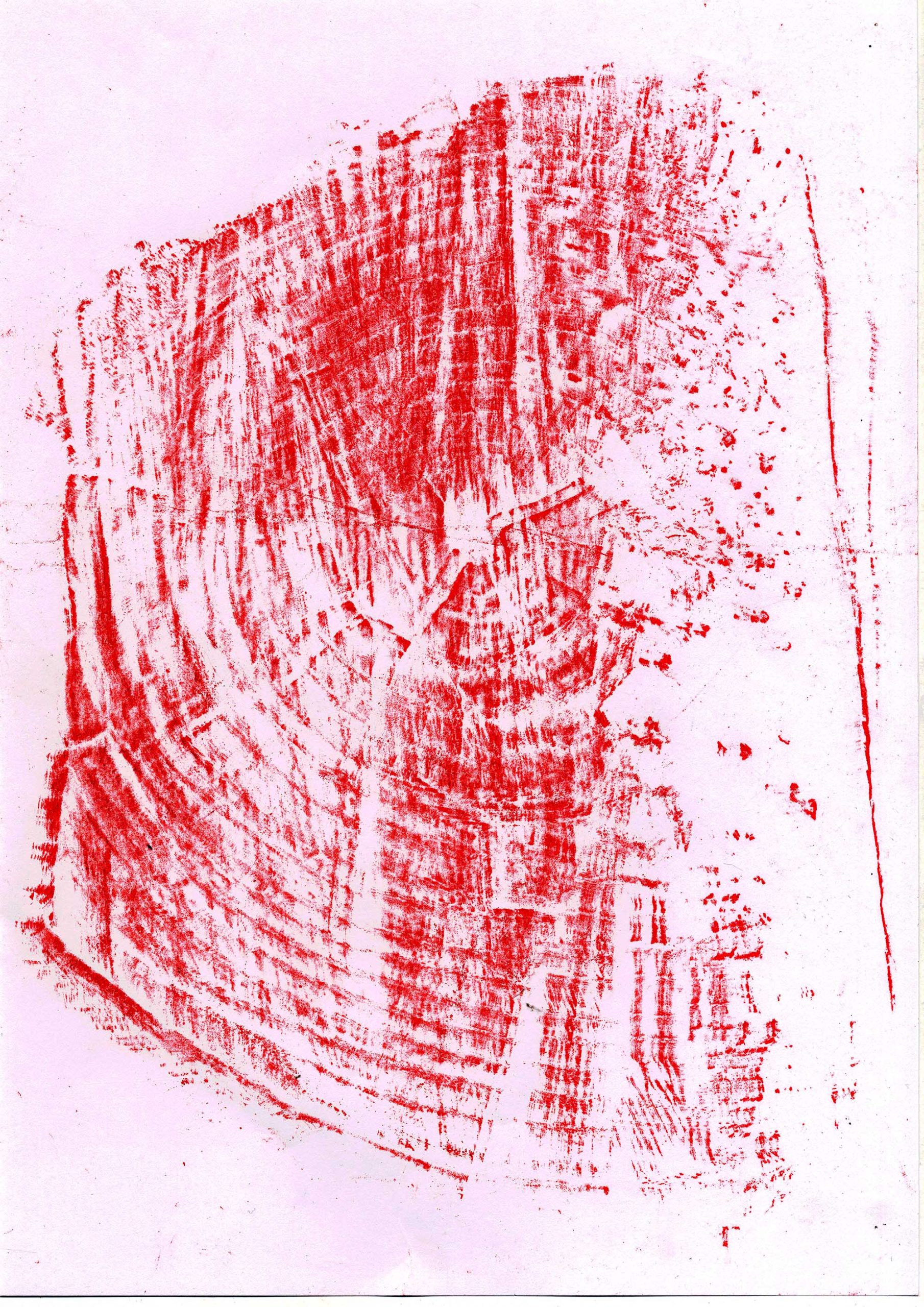


Prints, 2019, ink on paper, 21 x 29,7 cm
FOTEINI TATSI
Prints is part of the Ailanthus project that took place in Athens at 2019. For this project I explore an abandoned fabric factory in an industrial neighborhood in Athens, my biggest interest in that area was a specific kind of tree that was all over the place. Ailanthus Altissima is a native plant that usually grows very closely on walls, in small cracks, even on cement in abandoned, degraded areas, having great adaptability and very few needs. This tree is extremely important for its resistance to infection and its detergent properties and is used to restore areas that have been severely infected, such that of fabric industry. A Presidential Decree for the area provided for a gradual relocation of polluting companies and a 40% green space for some rehabilitation interventions, but the decree has not yet been implemented. However, Ailanthus is considered as a parasite and is not desirable, which is why it is common for people try to eradicate it in various ways. Prints it’s a 5 pieces series in which I collect from the industrial area parts of the tree that have been cut down. I take some red carbon papers and I use them to cover the cutten part of Ailanthus, with a spoon I take the imprint of the surface. In this way I try to capture a trauma, an open wound. In the imprints it’s visible the age and morphological characteristics of the tree but also the violence with which it has been cut. In this work I want to liken the case of the tree with the cases of people who are often treated as intruder.
Prints is part of the Ailanthus project that took place in Athens at 2019. For this project I explore an abandoned fabric factory in an industrial neighborhood in Athens, my biggest interest in that area was a specific kind of tree that was all over the place. Ailanthus Altissima is a native plant that usually grows very closely on walls, in small cracks, even on cement in abandoned, degraded areas, having great adaptability and very few needs. This tree is extremely important for its resistance to infection and its detergent properties and is used to restore areas that have been severely infected, such that of fabric industry. A Presidential Decree for the area provided for a gradual relocation of polluting companies and a 40% green space for some rehabilitation interventions, but the decree has not yet been implemented. However, Ailanthus is considered as a parasite and is not desirable, which is why it is common for people try to eradicate it in various ways. Prints it’s a 5 pieces series in which I collect from the industrial area parts of the tree that have been cut down. I take some red carbon papers and I use them to cover the cutten part of Ailanthus, with a spoon I take the imprint of the surface. In this way I try to capture a trauma, an open wound. In the imprints it’s visible the age and morphological characteristics of the tree but also the violence with which it has been cut. In this work I want to liken the case of the tree with the cases of people who are often treated as intruder.