
Award 2021
Welcome to the Social Art Award 2021 – Online Gallery!
We are grateful for the many inspiring contributions from artists around the world. The selected works reflect a broad spectrum of contemporary social art practices and explore new relationships between humans, nature, and technology. They address themes such as ecological regeneration, climate justice, sustainable futures, social resilience, and more-than-human perspectives.
Below you will find the submissions from the Social Art Award 2021 – New Greening edition that passed the initial jury round. The Online Gallery offers public visibility to these works and encourages dialogue around their ideas and approaches; it does not replace the final jury decision.
Thank you to all artists for sharing your visionary and committed work. We invite you to explore the gallery and engage with the perspectives shaping New Greening.


ZooPlastics
FilipaB
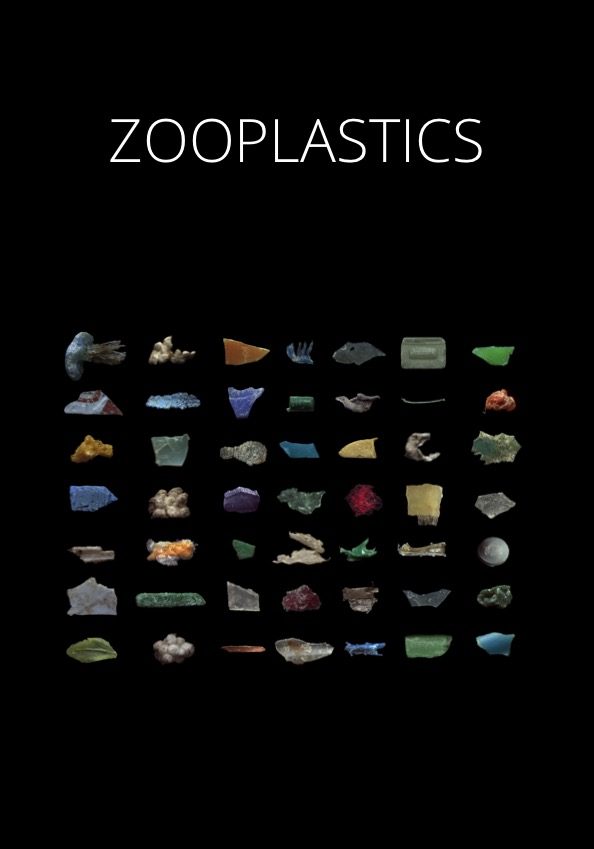
ZOOPLASTICS Just because you don't see it doesn’t mean its there This series of images entitled ZOOPLASTICS aim to raise awareness about the issue of plastic pollution in coastal and marine environments, in particular, the smaller and almost invisible particles that can result from the fragmentation of bigger pieces or being produced in small sizes, defined by scientists as microplastics (with less than 5 mm). ZOOPLASTICS is a description given to all these “new species” found in aquatic habitats. All plastic pieces were photographed under a stereo microscope (LEICA M80) and have been extracted from samples collected from the waters and sediments of the oceans, rivers and beaches and from the gut content of several aquatic species.
ZOOPLASTICS Just because you don't see it doesn’t mean its there This series of images entitled ZOOPLASTICS aim to raise awareness about the issue of plastic pollution in coastal and marine environments, in particular, the smaller and almost invisible particles that can result from the fragmentation of bigger pieces or being produced in small sizes, defined by scientists as microplastics (with less than 5 mm). ZOOPLASTICS is a description given to all these “new species” found in aquatic habitats. All plastic pieces were photographed under a stereo microscope (LEICA M80) and have been extracted from samples collected from the waters and sediments of the oceans, rivers and beaches and from the gut content of several aquatic species.