
Award 2021
Welcome to the Social Art Award 2021 – Online Gallery!
We are grateful for the many inspiring contributions from artists around the world. The selected works reflect a broad spectrum of contemporary social art practices and explore new relationships between humans, nature, and technology. They address themes such as ecological regeneration, climate justice, sustainable futures, social resilience, and more-than-human perspectives.
Below you will find the submissions from the Social Art Award 2021 – New Greening edition that passed the initial jury round. The Online Gallery offers public visibility to these works and encourages dialogue around their ideas and approaches; it does not replace the final jury decision.
Thank you to all artists for sharing your visionary and committed work. We invite you to explore the gallery and engage with the perspectives shaping New Greening.


Time throughout us
isadora.fv
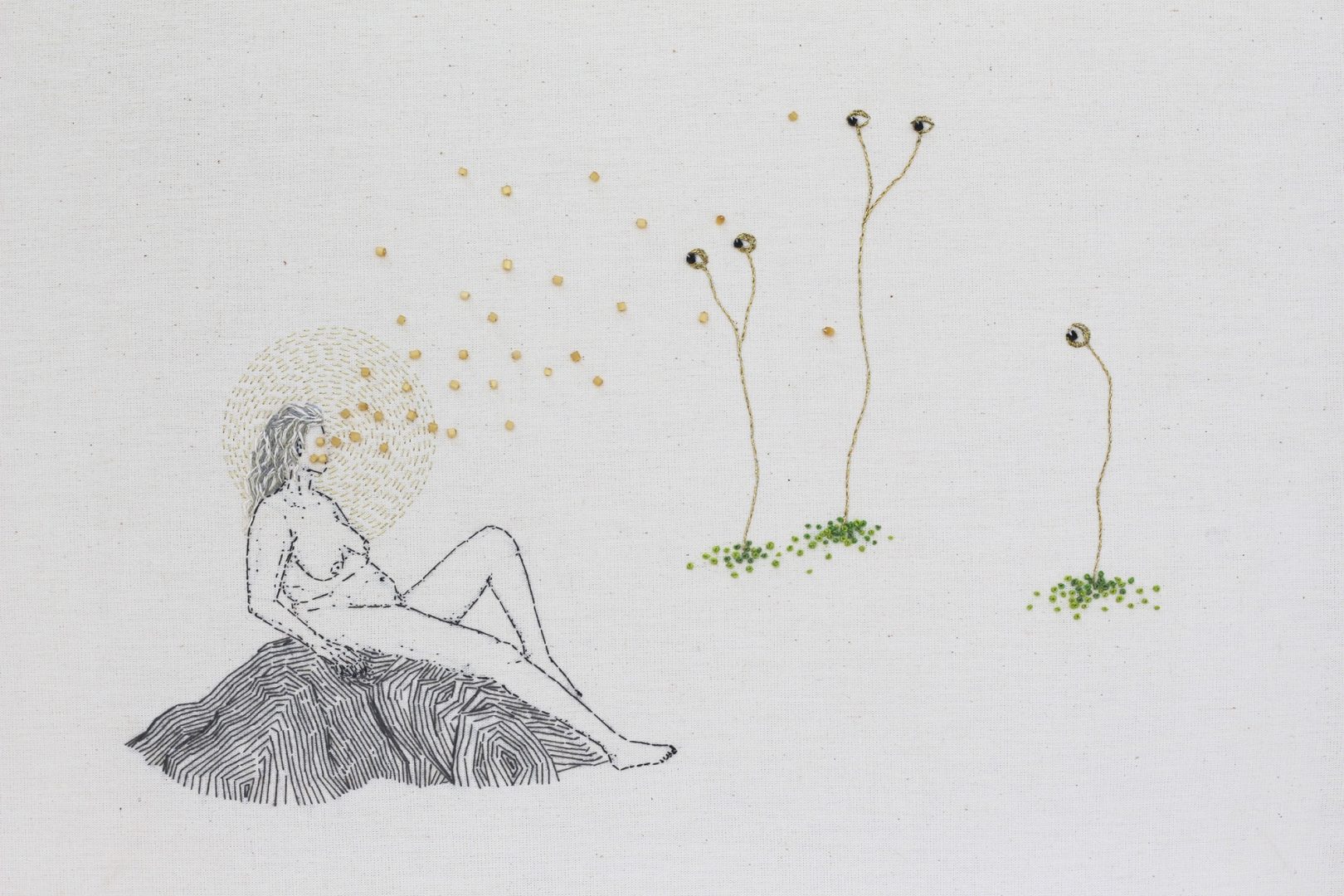
Time is a subjective element in our social organization. In our society this element works in a different way to women community, producing and exposing several conflicts about their relation with their self-images, aging and the world in general. This event is produced by this society and comprises other communities. This complex relation with time also feed the distinction between humanity and nature. The work is a hand embroidered image of an aged woman who looks at the horizon with her wisdom and experiences lights and is observed by the youngest and the environment that receives them.
Time is a subjective element in our social organization. In our society this element works in a different way to women community, producing and exposing several conflicts about their relation with their self-images, aging and the world in general. This event is produced by this society and comprises other communities. This complex relation with time also feed the distinction between humanity and nature. The work is a hand embroidered image of an aged woman who looks at the horizon with her wisdom and experiences lights and is observed by the youngest and the environment that receives them.