
Award 2021
Welcome to the Social Art Award 2021 – Online Gallery!
We are grateful for the many inspiring contributions from artists around the world. The selected works reflect a broad spectrum of contemporary social art practices and explore new relationships between humans, nature, and technology. They address themes such as ecological regeneration, climate justice, sustainable futures, social resilience, and more-than-human perspectives.
Below you will find the submissions from the Social Art Award 2021 – New Greening edition that passed the initial jury round. The Online Gallery offers public visibility to these works and encourages dialogue around their ideas and approaches; it does not replace the final jury decision.
Thank you to all artists for sharing your visionary and committed work. We invite you to explore the gallery and engage with the perspectives shaping New Greening.
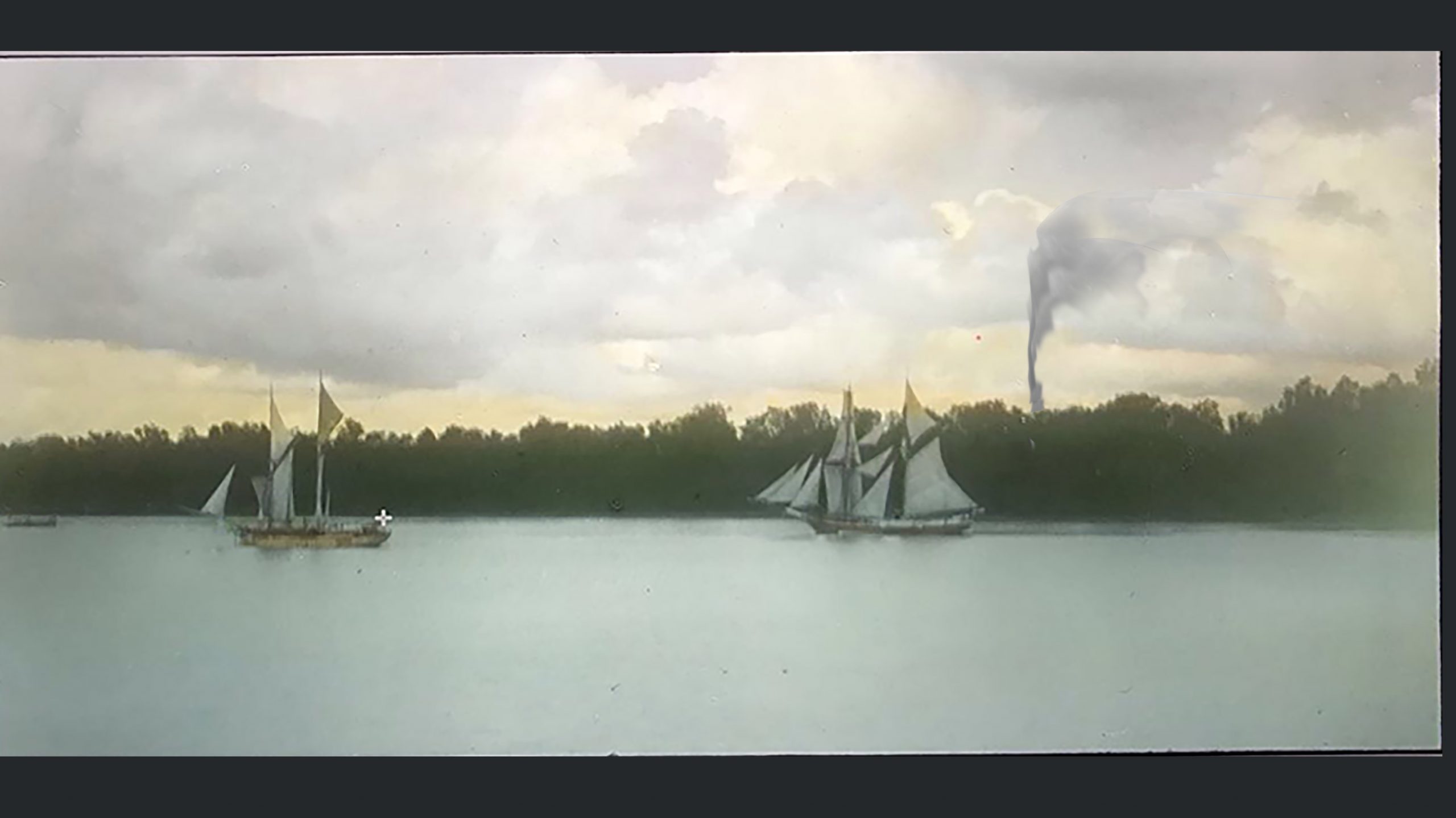


An anthropic presumption
Romina Orazi
The series “An anthropic presumption” was conceived after the encounter with a group of 19th century negatives. These glass-plates were painted, then scanned, printed and repainted. The landscape around us has been modified over time. In the same way that the geological layers are witnesses that reveal questions about the logic of what we are calling “environmental colonialism”. These images, which are like traces of different exotic environments, question the idea of “progress” as a behaviour of planetary violence, entangled and asymmetrical of old and new forces that move transversely across time and space scales. Global climate crisis is partly a product of the violence of colonialism against peoples, environments, societies and territories.
The series “An anthropic presumption” was conceived after the encounter with a group of 19th century negatives. These glass-plates were painted, then scanned, printed and repainted. The landscape around us has been modified over time. In the same way that the geological layers are witnesses that reveal questions about the logic of what we are calling “environmental colonialism”. These images, which are like traces of different exotic environments, question the idea of “progress” as a behaviour of planetary violence, entangled and asymmetrical of old and new forces that move transversely across time and space scales. Global climate crisis is partly a product of the violence of colonialism against peoples, environments, societies and territories.