
Welcome to the Social Art Award 2025 – Online Gallery!
We are grateful for the many powerful contributions from artists across the globe. The selected works reflect the diversity of contemporary social art practices and address urgent issues such as climate and water crises, social and economic inequality, migration, conflict, discrimination, and the protection of human and more-than-human life.
Below you will find the submissions from the edition of 2024/2025 that passed the initial jury round. The Online Gallery offers public visibility to these works and supports dialogue around their themes; it does not replace the final jury decision.
Thank you to all artists for sharing your inspiring and committed work. We invite you to explore the gallery and engage with the perspectives shaping the Social Art Award 2025.


trapped in frame
Hashim Nasr
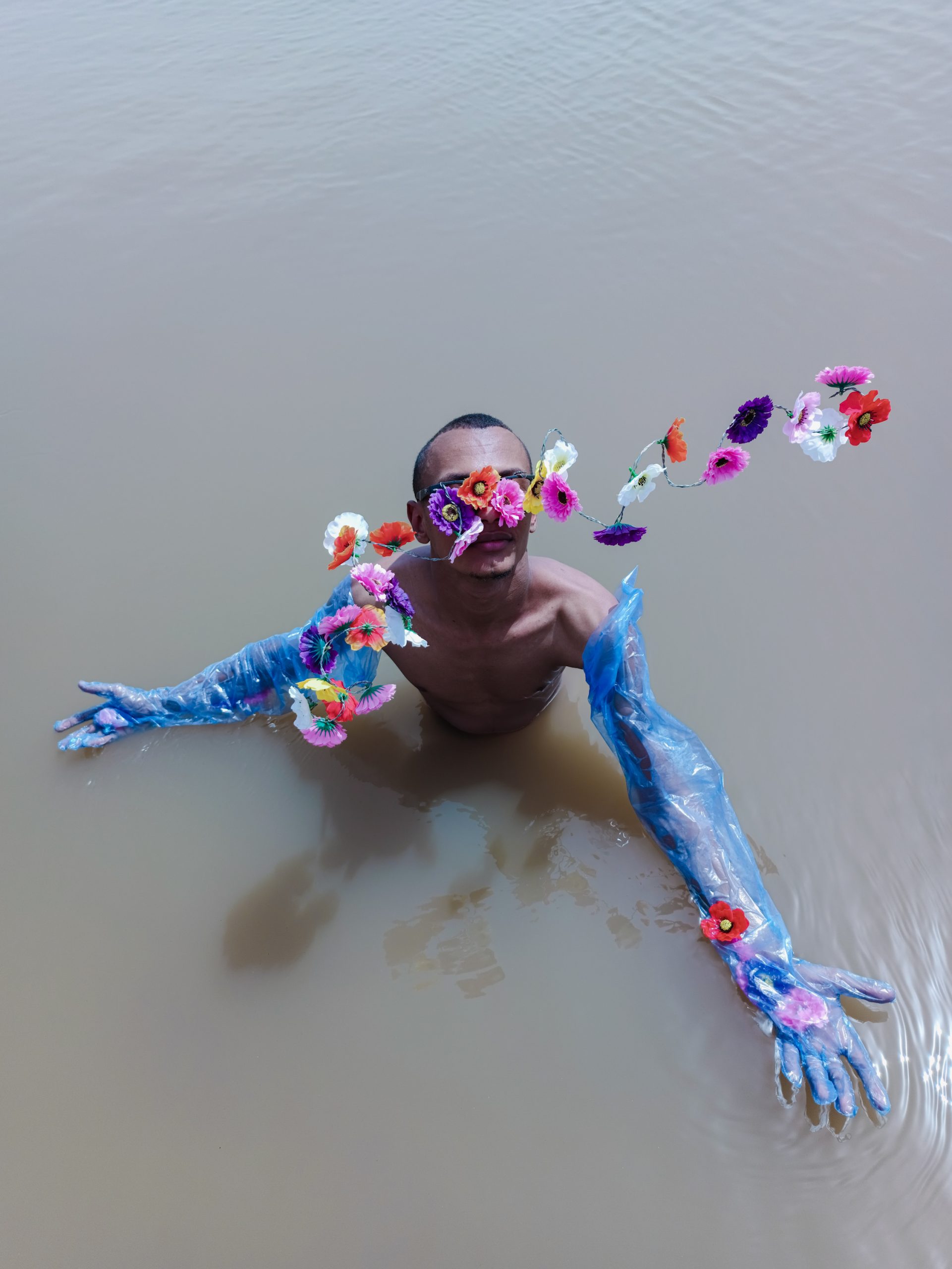
In Sudan, the significance of the blue plastic gloves differs from their conventional use by veterans elsewhere. While these gloves are commonly employed by veterans for animal examinations, in Sudan, they serve an alternative purpose. They are utilized in the application of bleaching and whitening creams. The blue gloves aid in generating heat, consequently promoting sweat production, which in turn accelerates the absorption of the whitening cream into the skin. This unique adaptation of the gloves illustrates the creative repurposing of everyday items to suit specific cultural and beauty practices within Sudanese society. The distortion of national identity and citizenship among dark-skinned individuals in certain communities in northern and central Sudan, coupled with stringent beauty standards, particularly for women, has driven them to seek skin lightening. The use of gloves is employed to facilitate the absorption of sweating skin for lightening creams. This distortion of beauty ideals underscores a disruption in the sense of community cohesion, with some individuals feeling disconnected and lacking a sense of belonging.
In Sudan, the significance of the blue plastic gloves differs from their conventional use by veterans elsewhere. While these gloves are commonly employed by veterans for animal examinations, in Sudan, they serve an alternative purpose. They are utilized in the application of bleaching and whitening creams. The blue gloves aid in generating heat, consequently promoting sweat production, which in turn accelerates the absorption of the whitening cream into the skin. This unique adaptation of the gloves illustrates the creative repurposing of everyday items to suit specific cultural and beauty practices within Sudanese society. The distortion of national identity and citizenship among dark-skinned individuals in certain communities in northern and central Sudan, coupled with stringent beauty standards, particularly for women, has driven them to seek skin lightening. The use of gloves is employed to facilitate the absorption of sweating skin for lightening creams. This distortion of beauty ideals underscores a disruption in the sense of community cohesion, with some individuals feeling disconnected and lacking a sense of belonging.