
Welcome to the Social Art Award 2025 – Online Gallery!
We are grateful for the many powerful contributions from artists across the globe. The selected works reflect the diversity of contemporary social art practices and address urgent issues such as climate and water crises, social and economic inequality, migration, conflict, discrimination, and the protection of human and more-than-human life.
Below you will find the submissions from the edition of 2024/2025 that passed the initial jury round. The Online Gallery offers public visibility to these works and supports dialogue around their themes; it does not replace the final jury decision.
Thank you to all artists for sharing your inspiring and committed work. We invite you to explore the gallery and engage with the perspectives shaping the Social Art Award 2025.
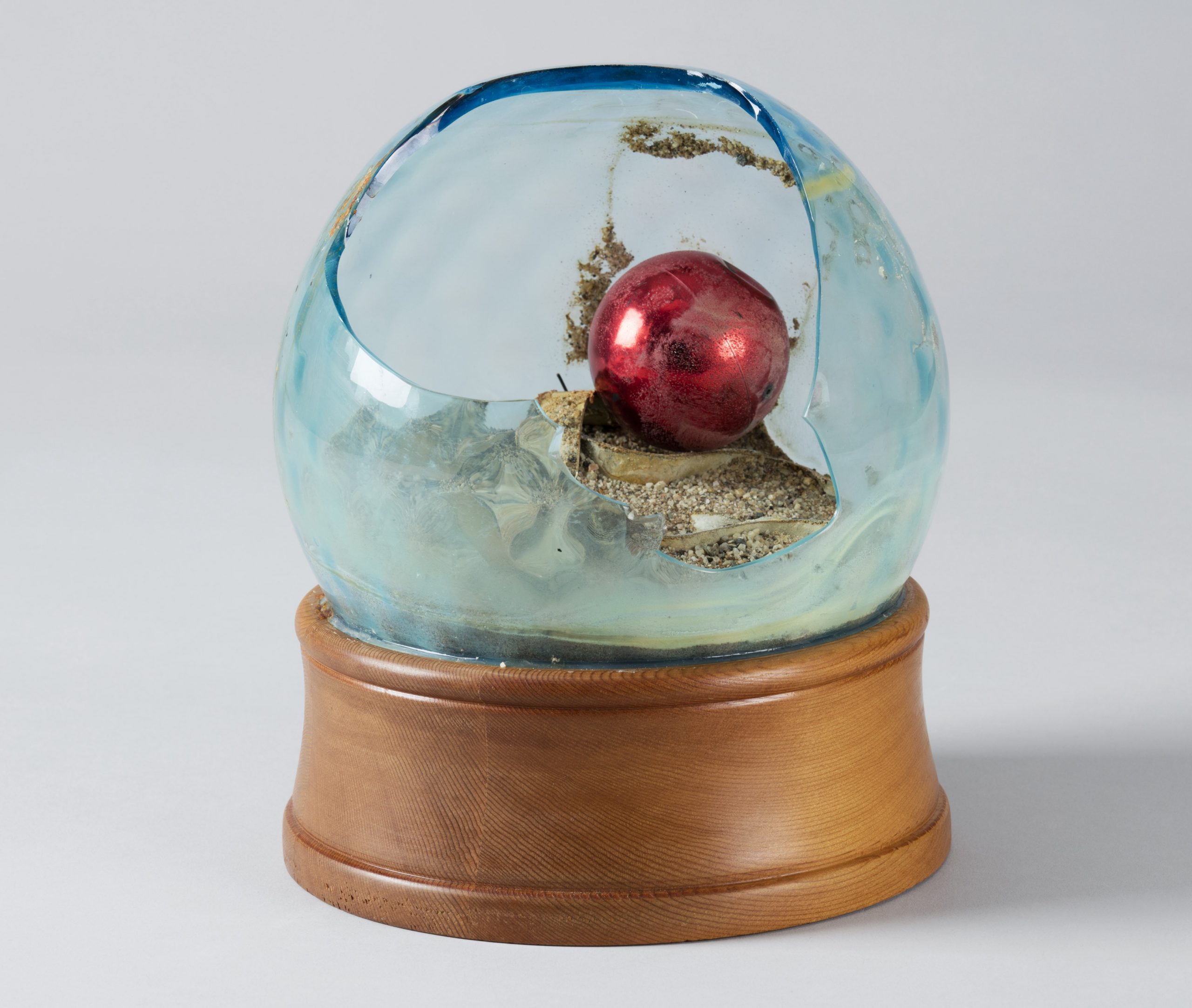


Tsunami, Koh Phi Phi Thailand 2004
isabellezab
I am a SCUBA diving instructor. In 2004 I traveled to Koh Phi Phi, Thailand, 4 months after the tsunami. When the wave hit, it destroyed 60 percent of the buildings on the island and claimed nearly 1300 lives. You could see the desolation everywhere, only locals and volunteers inhabited the island and had just the most basic of amenities. For the following 4 months to the rate of 3 dives a day and 6 days a week, I became part of the volunteer clean up diving crew. We collected literal tons of debris strewn 12 metres deep in the bay of Koh Phi Phi. Working with the amazing dive/snorkel teams, we filled our underwater nets with every conceivable remains we could grasp. This piece is a commemoration of that experience; and a small monument to it. All the materials used are second hand, found, or given to me in the spirit of sharing resources. The snow globe shape is a reminder that the tsunami happened on December 26 while the sand and metal pieces are a representation of the countless undulated iron sheets we pulled out of the bottom of the sea. Those were the main roofing materials for the 800 bungalows and buildings that disappeared. The debris retrieved from the water has ranged from trees and construction materials to personal effects vital in helping identify those missing in the wake of the disaster.
I am a SCUBA diving instructor. In 2004 I traveled to Koh Phi Phi, Thailand, 4 months after the tsunami. When the wave hit, it destroyed 60 percent of the buildings on the island and claimed nearly 1300 lives. You could see the desolation everywhere, only locals and volunteers inhabited the island and had just the most basic of amenities. For the following 4 months to the rate of 3 dives a day and 6 days a week, I became part of the volunteer clean up diving crew. We collected literal tons of debris strewn 12 metres deep in the bay of Koh Phi Phi. Working with the amazing dive/snorkel teams, we filled our underwater nets with every conceivable remains we could grasp. This piece is a commemoration of that experience; and a small monument to it. All the materials used are second hand, found, or given to me in the spirit of sharing resources. The snow globe shape is a reminder that the tsunami happened on December 26 while the sand and metal pieces are a representation of the countless undulated iron sheets we pulled out of the bottom of the sea. Those were the main roofing materials for the 800 bungalows and buildings that disappeared. The debris retrieved from the water has ranged from trees and construction materials to personal effects vital in helping identify those missing in the wake of the disaster.