
Award 2021
Welcome to the Social Art Award 2021 – Online Gallery!
We are grateful for the many inspiring contributions from artists around the world. The selected works reflect a broad spectrum of contemporary social art practices and explore new relationships between humans, nature, and technology. They address themes such as ecological regeneration, climate justice, sustainable futures, social resilience, and more-than-human perspectives.
Below you will find the submissions from the Social Art Award 2021 – New Greening edition that passed the initial jury round. The Online Gallery offers public visibility to these works and encourages dialogue around their ideas and approaches; it does not replace the final jury decision.
Thank you to all artists for sharing your visionary and committed work. We invite you to explore the gallery and engage with the perspectives shaping New Greening.
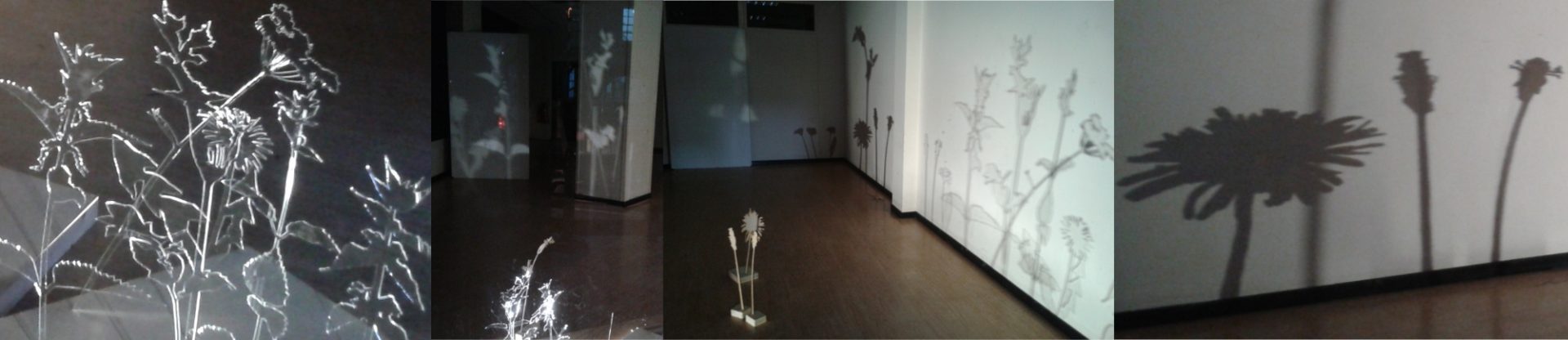


Spring Uprising
Monika Dutta and Jake Harries
Designed to be viewed from the street through glass frontage, the work exposes the tensions between metropolis and wilderness by highlighting the unfamiliarity of natural forms within the built environment. A sculptural and light installation complemented by a series of radical urban interventions, subvertising, and performative actions designed to bring the idea of wild food into an urban arena. Shadows and reflections from digitally fabricated forms originating from drawings of common edible weeds are animated within the space, using existing architectural features, to mirror the subtle and random movements of plants in their natural environment.
Designed to be viewed from the street through glass frontage, the work exposes the tensions between metropolis and wilderness by highlighting the unfamiliarity of natural forms within the built environment. A sculptural and light installation complemented by a series of radical urban interventions, subvertising, and performative actions designed to bring the idea of wild food into an urban arena. Shadows and reflections from digitally fabricated forms originating from drawings of common edible weeds are animated within the space, using existing architectural features, to mirror the subtle and random movements of plants in their natural environment.