
Welcome to the Social Art Award 2025 – Online Gallery!
We are grateful for the many powerful contributions from artists across the globe. The selected works reflect the diversity of contemporary social art practices and address urgent issues such as climate and water crises, social and economic inequality, migration, conflict, discrimination, and the protection of human and more-than-human life.
Below you will find the submissions from the edition of 2024/2025 that passed the initial jury round. The Online Gallery offers public visibility to these works and supports dialogue around their themes; it does not replace the final jury decision.
Thank you to all artists for sharing your inspiring and committed work. We invite you to explore the gallery and engage with the perspectives shaping the Social Art Award 2025.
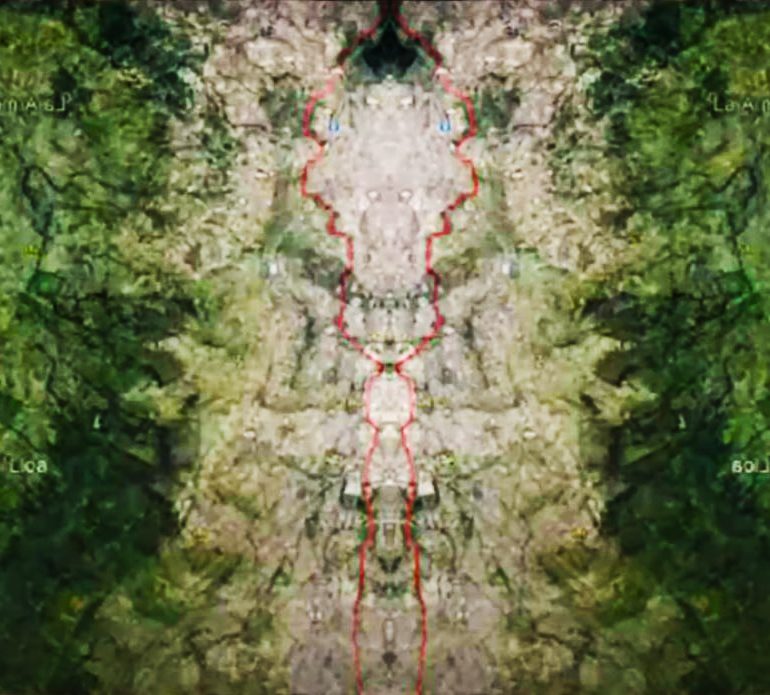


The hydrography of the serpent
Ricardo Cabrera Zambrano
The audiovisual tour of the hydrographic basin that links the Atacazo volcano with the Pacific Ocean highlights the dynamic connection of water throughout the territory, evoking the snake as an ancestral symbol of flow and transformation. From the heights of Atacazo, the currents descend through the Machángara, San Pedro and Guayllabamba rivers, passing through the Manduriacu dam, until they reach the Esmeraldas River and flow into the Pacific. This transit reveals a narrative of interdependence between the mountain and the sea, where water, far from being a static resource, is an organism in constant dialogue with its environment. The work fuses satellite images with sensory records, seeking to convey the importance of preserving these ecosystems. Through rhythm and visual harmony, a meditation on the nature of water and its vital role in the ecology and the Andean cosmovision is established.
The audiovisual tour of the hydrographic basin that links the Atacazo volcano with the Pacific Ocean highlights the dynamic connection of water throughout the territory, evoking the snake as an ancestral symbol of flow and transformation. From the heights of Atacazo, the currents descend through the Machángara, San Pedro and Guayllabamba rivers, passing through the Manduriacu dam, until they reach the Esmeraldas River and flow into the Pacific. This transit reveals a narrative of interdependence between the mountain and the sea, where water, far from being a static resource, is an organism in constant dialogue with its environment. The work fuses satellite images with sensory records, seeking to convey the importance of preserving these ecosystems. Through rhythm and visual harmony, a meditation on the nature of water and its vital role in the ecology and the Andean cosmovision is established.