
Award 2021
Welcome to the Social Art Award 2021 – Online Gallery!
We are grateful for the many inspiring contributions from artists around the world. The selected works reflect a broad spectrum of contemporary social art practices and explore new relationships between humans, nature, and technology. They address themes such as ecological regeneration, climate justice, sustainable futures, social resilience, and more-than-human perspectives.
Below you will find the submissions from the Social Art Award 2021 – New Greening edition that passed the initial jury round. The Online Gallery offers public visibility to these works and encourages dialogue around their ideas and approaches; it does not replace the final jury decision.
Thank you to all artists for sharing your visionary and committed work. We invite you to explore the gallery and engage with the perspectives shaping New Greening.
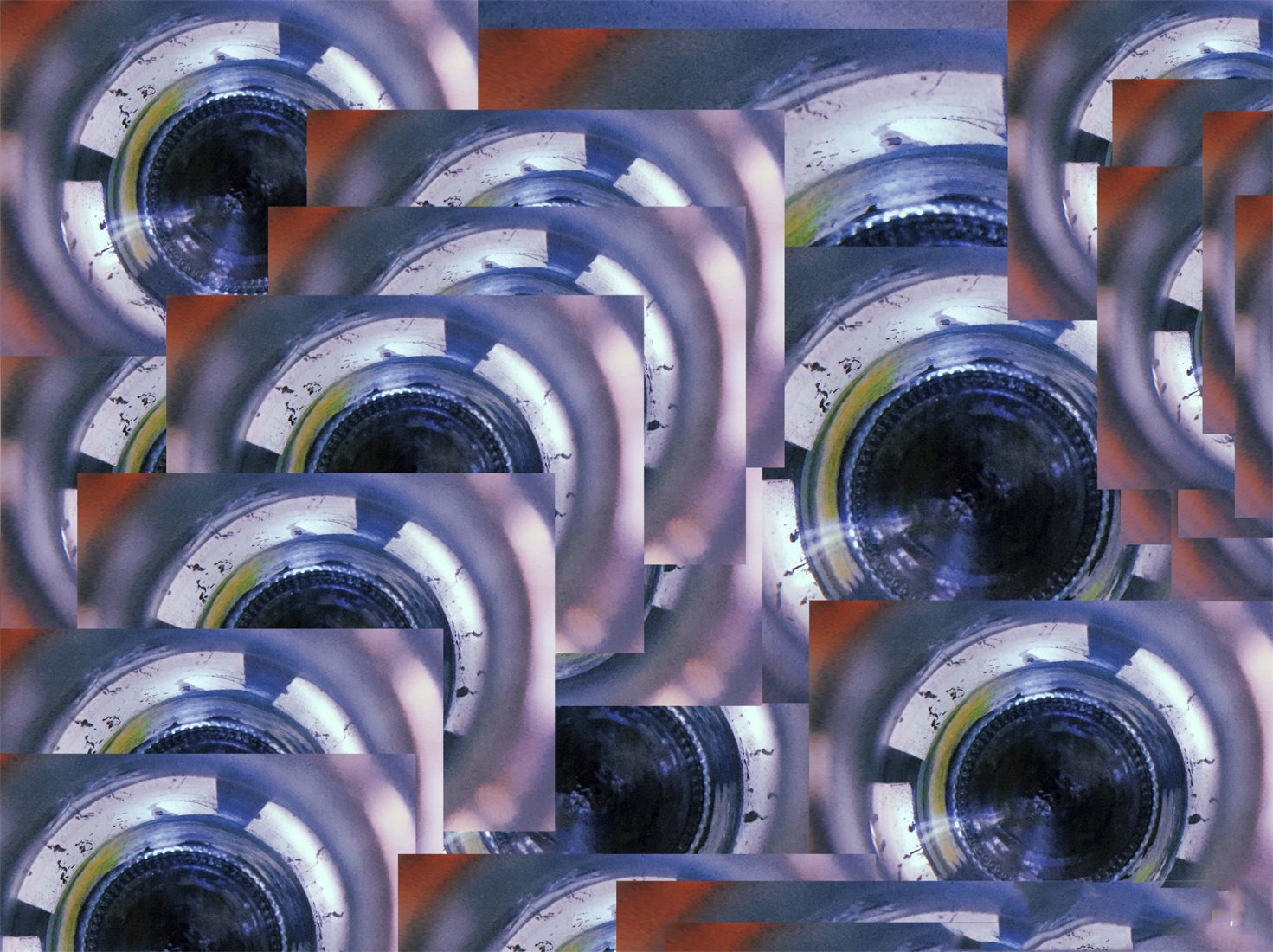


Anthropocene
Nino Memanishvili
Earth is 4.5 billion years old, modern humans have been around for 200,000 years. In that time we have fundamentally altered the physical, chemical and biological systems of the planet on which we and all other organisms inhabit. Homo sapiens, had a significant impact on Earth, in the past 60 years, human impacts have unfolded at an unprecedented rate and scale, potentially irreversible influence on its systems, environment, processes and biodiversity. This period is sometimes known as the Great Acceleration. The familiar contrast between people and the natural world no longer holds. There is no more nature that stands apart from human beings. There is no place or living thing that we haven't changed. The question is no longer how to preserve a wild world from human intrusion; it is what shape we will give to a world we can't help changing. Anthropocene is controversial; we are living in a new geological epoch – with Carbon dioxide emissions, global warming, ocean acidification, habitat destruction, wide scale natural resource extraction, COVID, plastic polution, not to mention all. In presented series I tried to show Anthropocene as today’s reality, which is part of everyday life - Industry, buildings, machines, nature, bio-organisms, and technological diversity, with this I wished to describe the subjects or matters on which humans had and have a substantial impact. Our awareness of both the current state of the planet and the effects of our actions is a key factor in the Anthropocene; our planet's global ecology has never been in such a critical state as it is today. But we have also never been better equipped and educated to understand what is happening and what needs to be done.
Earth is 4.5 billion years old, modern humans have been around for 200,000 years. In that time we have fundamentally altered the physical, chemical and biological systems of the planet on which we and all other organisms inhabit. Homo sapiens, had a significant impact on Earth, in the past 60 years, human impacts have unfolded at an unprecedented rate and scale, potentially irreversible influence on its systems, environment, processes and biodiversity. This period is sometimes known as the Great Acceleration. The familiar contrast between people and the natural world no longer holds. There is no more nature that stands apart from human beings. There is no place or living thing that we haven't changed. The question is no longer how to preserve a wild world from human intrusion; it is what shape we will give to a world we can't help changing. Anthropocene is controversial; we are living in a new geological epoch – with Carbon dioxide emissions, global warming, ocean acidification, habitat destruction, wide scale natural resource extraction, COVID, plastic polution, not to mention all. In presented series I tried to show Anthropocene as today’s reality, which is part of everyday life - Industry, buildings, machines, nature, bio-organisms, and technological diversity, with this I wished to describe the subjects or matters on which humans had and have a substantial impact. Our awareness of both the current state of the planet and the effects of our actions is a key factor in the Anthropocene; our planet's global ecology has never been in such a critical state as it is today. But we have also never been better equipped and educated to understand what is happening and what needs to be done.