
Award 2021
Welcome to the Social Art Award 2021 – Online Gallery!
We are grateful for the many inspiring contributions from artists around the world. The selected works reflect a broad spectrum of contemporary social art practices and explore new relationships between humans, nature, and technology. They address themes such as ecological regeneration, climate justice, sustainable futures, social resilience, and more-than-human perspectives.
Below you will find the submissions from the Social Art Award 2021 – New Greening edition that passed the initial jury round. The Online Gallery offers public visibility to these works and encourages dialogue around their ideas and approaches; it does not replace the final jury decision.
Thank you to all artists for sharing your visionary and committed work. We invite you to explore the gallery and engage with the perspectives shaping New Greening.
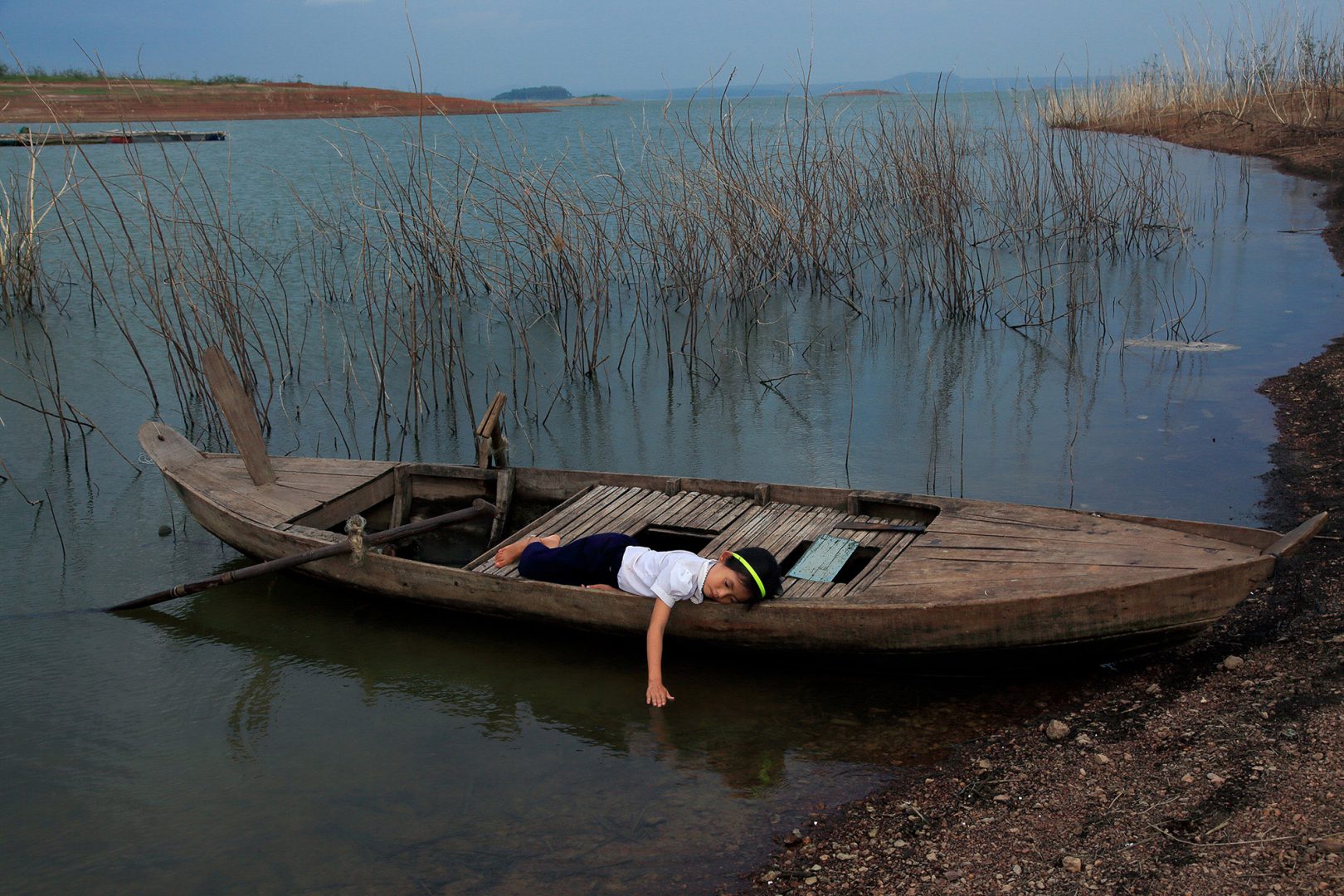


Holding Water
Duy Phuong
Holding Water is the result of five years work, in which Duy Phuong documented the landscape and lives of communities living on the shores of Tri An Lake in South Vietnam - now the site of a hydroelectric dam. His poetic and intimate photos reflect on the bond between the people and the land, and the uncertainty that awaits them. Blending Vietnamese sensibility and French aesthetic, he has the ability to balance form and concept in a way that is both provocative and restrained. Touching the water, I feel the sensation of it slipping through my hands, the currents flowing warm and cold, cool and pleasant. Wet marks form on the skin. Water haunts my dreams. It has always been a source of obsession since I was a little boy. In my obscure childhood recollections, water stirs up unsettling feelings. I found myself in Tri An Lake by chance, the site one of the biggest hydroelectric dams in the South of Vietnam. Here, water is the fate of the people. They are the water and the water is their lives. It is also their dreams, their hopes and hopelessness. As my acquaintance with the place deepened, I was allowed to tag along with the people whose lives revolve around the rising and ebbing of the tides. Somehow my life became interwoven into their daily life and interior world, amidst a sublime and spellbinding background. Humans, nature and memories appear and vanish, like the glimmering reflections in the river of life. The lake, with both its dreamlike characteristics and the physicality of its landscapes, merges with the people and their existence, all becoming an oneiric part of my work. I immersed myself in the waters, carried away by its currents, the way a stranger immerses himself in the life of the local people, carried away by the intimacy and confidence they shared with me. Water is the spirit that you can only understand by being immersed in its essence. While conscious of the damage these dams might inflict on the lake communities in the near-future, the locals remain attached to their habitual way of life. In sharing their personal stories, reality and fiction collided. As well as illustrating their connection to the water - which has deepened throughout the generations - there is an underlying fear of loss. The children who grow up here leave seeking new horizons and opportunities that will in turn shape their lives. Some return altered by the experience, others never return or get swept away by the tides. Youth is like the water you’ve caught in your hand: it slips through your fingers when you try to hold on. So be still and let it go.
Holding Water is the result of five years work, in which Duy Phuong documented the landscape and lives of communities living on the shores of Tri An Lake in South Vietnam - now the site of a hydroelectric dam. His poetic and intimate photos reflect on the bond between the people and the land, and the uncertainty that awaits them. Blending Vietnamese sensibility and French aesthetic, he has the ability to balance form and concept in a way that is both provocative and restrained. Touching the water, I feel the sensation of it slipping through my hands, the currents flowing warm and cold, cool and pleasant. Wet marks form on the skin. Water haunts my dreams. It has always been a source of obsession since I was a little boy. In my obscure childhood recollections, water stirs up unsettling feelings. I found myself in Tri An Lake by chance, the site one of the biggest hydroelectric dams in the South of Vietnam. Here, water is the fate of the people. They are the water and the water is their lives. It is also their dreams, their hopes and hopelessness. As my acquaintance with the place deepened, I was allowed to tag along with the people whose lives revolve around the rising and ebbing of the tides. Somehow my life became interwoven into their daily life and interior world, amidst a sublime and spellbinding background. Humans, nature and memories appear and vanish, like the glimmering reflections in the river of life. The lake, with both its dreamlike characteristics and the physicality of its landscapes, merges with the people and their existence, all becoming an oneiric part of my work. I immersed myself in the waters, carried away by its currents, the way a stranger immerses himself in the life of the local people, carried away by the intimacy and confidence they shared with me. Water is the spirit that you can only understand by being immersed in its essence. While conscious of the damage these dams might inflict on the lake communities in the near-future, the locals remain attached to their habitual way of life. In sharing their personal stories, reality and fiction collided. As well as illustrating their connection to the water - which has deepened throughout the generations - there is an underlying fear of loss. The children who grow up here leave seeking new horizons and opportunities that will in turn shape their lives. Some return altered by the experience, others never return or get swept away by the tides. Youth is like the water you’ve caught in your hand: it slips through your fingers when you try to hold on. So be still and let it go.